A stroke is a serious medical emergency that can affect anyone, often without warning. It occurs when blood flow to the brain is interrupted or reduced, causing brain cells to die within minutes. Acting fast can reduce brain damage and even save a life. This blog will walk you through what a stroke is, its different types, the most common warning signs, and how early action can make all the difference.
What Is a Stroke?
A stroke happens when something blocks the blood supply to the brain or when a blood vessel in the brain bursts. Without oxygen-rich blood, brain cells quickly begin to die. The impact of a stroke can be mild or severe, and recovery often depends on how quickly the person receives treatment.
There are three main types of strokes:
- Ischemic Stroke: Caused by a blood clot that blocks or narrows a blood vessel in the brain. This is the most common type, accounting for about 87% of all strokes.
- Hemorrhagic Stroke: Happens when a blood vessel in the brain bursts, causing bleeding. This type is less common but can be more severe.
- Transient Ischemic Attack (TIA): Sometimes called a mini-stroke, this is a temporary blockage that goes away on its own. While it doesn’t cause lasting damage, it’s a warning sign that a full stroke could happen soon.
Common Causes and Risk Factors
Several factors increase the risk of stroke, including:
- High blood pressure
- High cholesterol
- Diabetes
- Smoking and Other Forms of Tobacco Use
- Physical inactivity
- Obesity
- Atrial fibrillation (an irregular heartbeat)
- Family history of stroke
A healthy lifestyle, such as regular exercise, a balanced diet, managing blood pressure, and stopping tobacco use, can help reduce your risk.
Recognizing Stroke Symptoms: Use F.A.S.T.
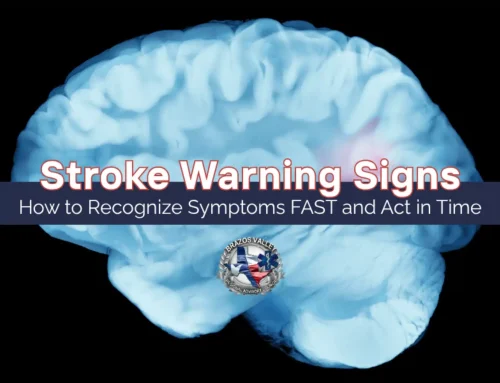
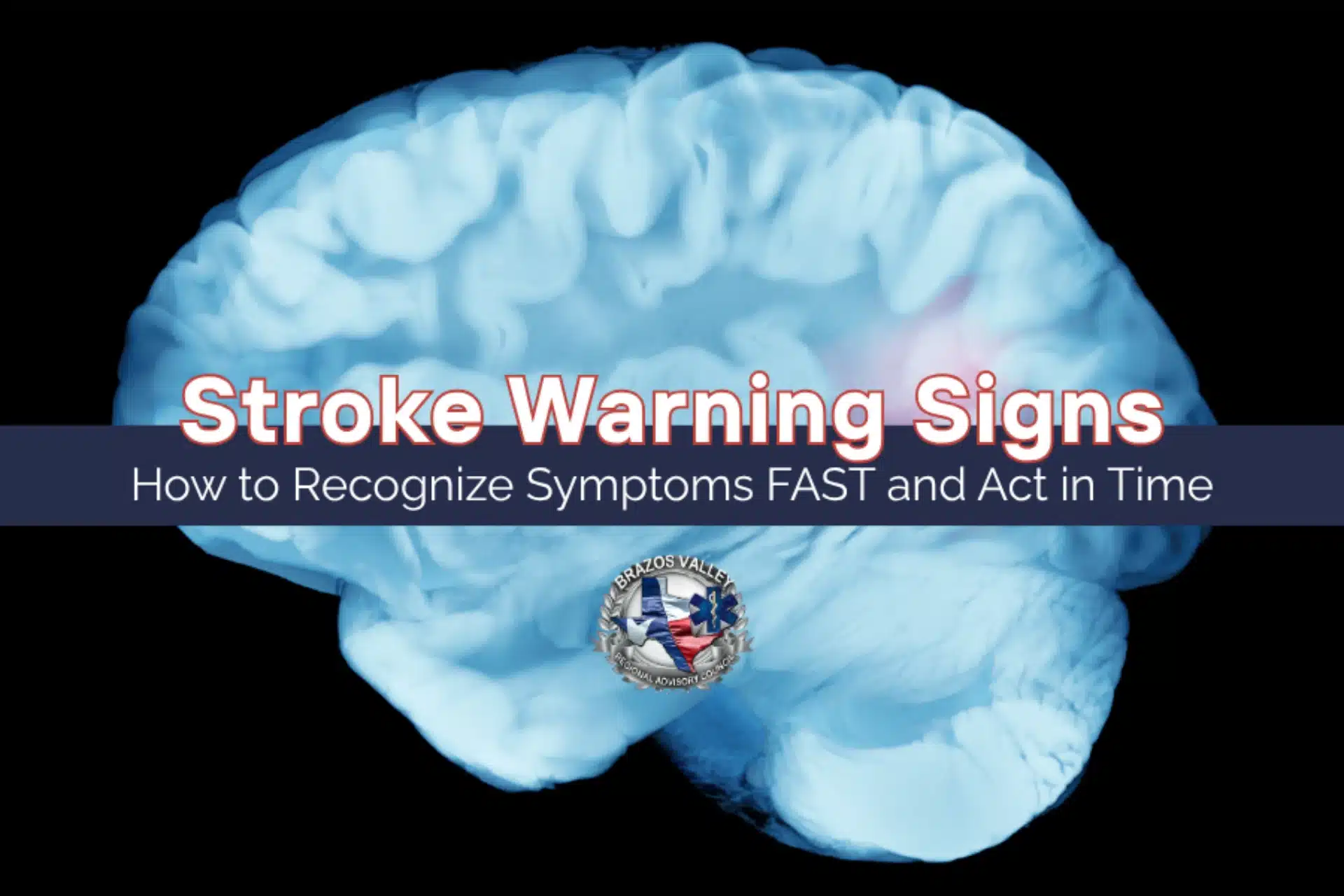
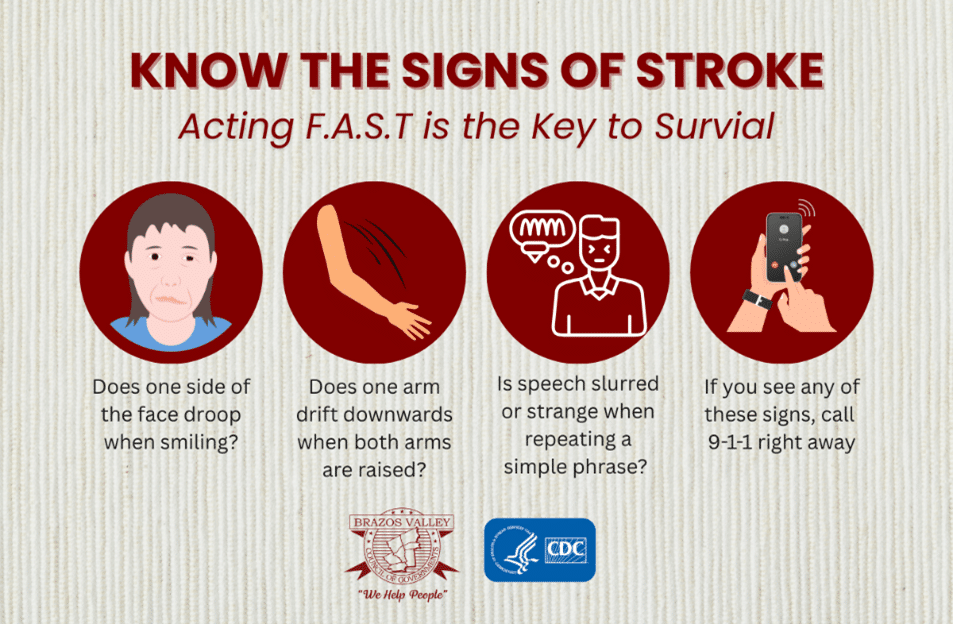
Knowing how to spot a stroke can be lifesaving. The F.A.S.T. acronym is an easy way to remember the most common symptoms:
- F – Face drooping: One side of the face may droop or feel numb. Ask the person to smile. Does one side of the mouth droop?
- A – Arm weakness: One arm may be weak or numb. Ask the person to raise both arms. Does one drift downward?
- S – Speech difficulty: Speech may be slurred or hard to understand. Ask the person to repeat a simple sentence. Can they do it?
- T – Time to call 911: If someone shows any of these symptoms, call 911 right away. Don’t wait—every minute counts.
Other possible signs include sudden confusion, trouble seeing in one or both eyes, difficulty walking, dizziness, or a sudden severe headache with no known cause.
Why Timing Is Everything
When someone is having a stroke, minutes can mean the difference between recovery and disability. Time lost is brain lost. Immediate treatment can improve the chances of survival and recovery. Emergency responders and hospitals now follow specialized stroke protocols to restore blood flow as quickly as possible. Certain medications and procedures must be administered within hours of the first symptom, which is why acting fast is crucial.
BVRAC and Regional Stroke Care
In Brazos Valley, BVRAC plays a key role in public education, professional training, and preparedness for critical incidents. By promoting awareness and rapid response systems, they help save lives and improve recovery for stroke survivors in our local communities.
Final Thoughts
Understanding stroke symptoms and the importance of acting quickly could be the difference between full recovery and lifelong disability. Share this knowledge with the people around you. It could save a loved one—or even your own life.
Want to learn more? Visit NIA’s Stroke Resource for detailed information on stroke causes, treatment, and recovery.