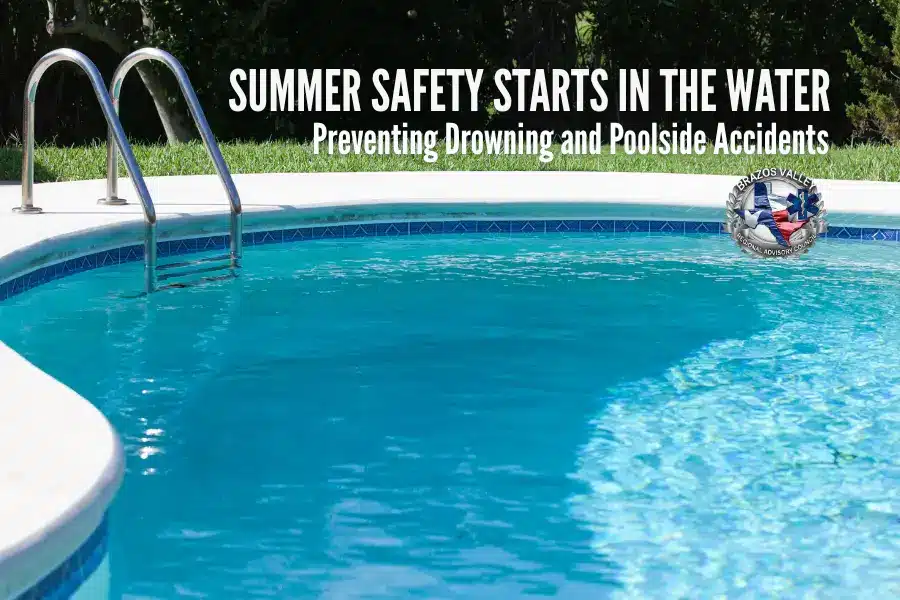
As summer temperatures rise, families across the Brazos Valley head outdoors to enjoy backyard pools, lakes, and splash pads. While swimming is a great way to stay active and cool, it’s also important to remember that water safety should be a top priority, especially for children.
Drowning is a leading cause of accidental death among children, and most incidents are preventable with a few key precautions. Whether you’re at home, at a friend’s pool, or at a public swimming facility, these essential tips can help you create a safer environment for everyone.
1. Start with Swim Lessons
Formal swimming instruction is one of the most effective ways to prevent drowning. Children as young as six months can begin learning water survival skills, and older kids benefit from structured lessons that teach confidence and control in the water. Look for certified programs in your area that emphasize both swimming technique and safety awareness.
Enroll your child in a local swimming lesson program this summer; it could save a life.
Local Swim Lesson Options in the Brazos Valley:
2. Supervision is Non-Negotiable
Always designate a responsible adult as a “Water Watcher.” This person should avoid distractions like phones or conversations and focus solely on supervising children in or near the water. Drowning can happen quickly and silently, even in shallow water, so active attention is critical.
Pro Tip: Rotate water-watching duties during gatherings so no one person is overwhelmed or distracted.
3. Use Flotation Devices—The Right Way
While inflatable toys, inner tubes, and arm floaties can be fun, they are not life-saving devices, and relying on them can create a false sense of security. For real protection, children should always wear a properly fitted U.S. Coast Guard-approved life jacket when near open water or riding in boats.
Devices like “Puddle Jumpers” may seem convenient, but they are not a substitute for a certified life jacket. They can give children a dangerous level of confidence without offering true safety. Do your research before purchasing flotation devices to ensure your child is wearing something that could truly save their life, not something that just floats.
Tip: Always check for Coast Guard approval on the label before buying.
4. Secure Your Pool with Fencing and Alarms
Backyard pools should be fully enclosed with a four-sided fence that has a self-latching gate. Pool alarms and door locks provide an extra layer of protection, especially in homes with toddlers. These barriers create a critical line of defense when supervision lapses.
Reminder: Even small inflatable pools should be emptied and stored after EACH use to prevent unsupervised access.
5. Be Prepared: Learn CPR and Keep a Safety Checklist
In an emergency, every second counts. Knowing how to perform CPR can make the difference between life and death while waiting for first responders to arrive. Fortunately, many local and national organizations offer CPR certification courses that can be completed in just a few hours, equipping you with the skills and confidence to act quickly.
Additionally, having a Water Safety Checklist visible near your pool or swim area helps reinforce the importance of supervision, proper barriers, and emergency readiness. It’s a simple but powerful way to stay on top of safety.
Visit the Red Cross CPR Training page to find a local class near you.
Bonus: Download and print the Stop Drowning Now Water Safety Checklist to review with your family before heading to the pool or lake.
Keep Brazos Valley Families Safe This Summer
At the Brazos Valley Regional Advisory Council (BVRAC), we believe that prevention is the best protection. Together, we can reduce the risk of drowning and create safer summer experiences for everyone.
Take action today:
- Enroll in swim lessons or a CPR course
- Share this blog with your community
- Visit the Stop Drowning Now website for more information and checklists
Let’s make this summer safe, fun, and unforgettable, for all the right reasons.