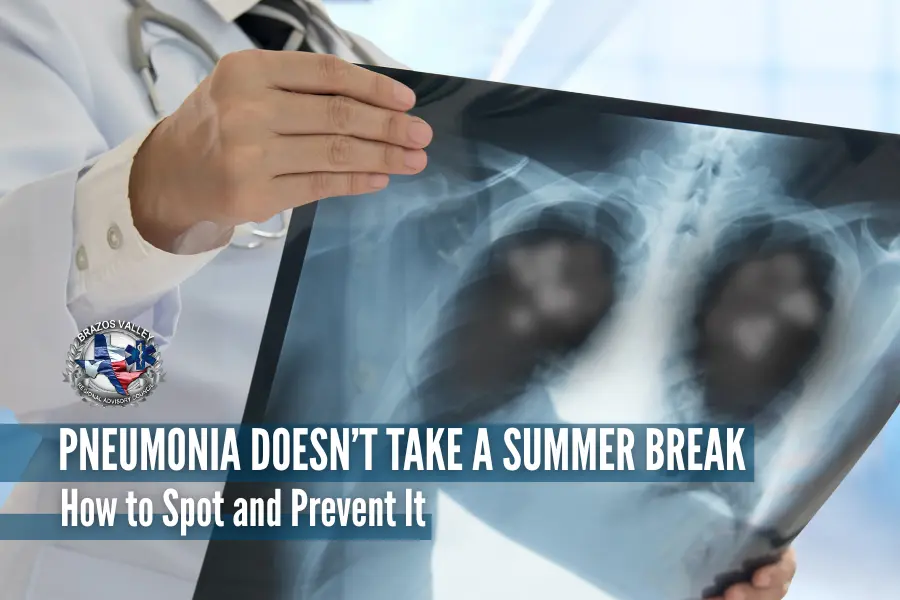
When most people think of pneumonia, they picture winter months and chilly temperatures. But pneumonia doesn’t follow a seasonal schedule. During the summer, rising temperatures and travel plans can distract from signs of illnesses, especially in vulnerable populations like children, seniors, and immunocompromised individuals.
Understanding how pneumonia presents during the warmer months is key to prevention and early treatment. Here’s what you need to know.
What is Pneumonia?
Pneumonia is an infection that inflames the air sacs in one or both lungs, which may fill with fluid or pus. It can be caused by bacteria, viruses, or fungi, and its effects can be serious, even life-threatening, for those with weakened immune systems.
Why Summer Pneumonia Is Still a Risk
Though winter is known for respiratory illnesses, summer comes with its pneumonia triggers:
- Air conditioning and indoor crowding can harbor bacteria.
- Dehydration weakens the immune system.
- Allergies and air pollution can inflame airways and increase susceptibility.
- Travel and camps increase exposure to unfamiliar germs.
Who’s Most at Risk?
Pneumonia can affect anyone, but special attention should be given to:
- Children under 5
- Seniors 65 and older
- People with chronic illnesses or weakened immune systems
These groups may not display typical symptoms and may progress quickly from mild to severe.
Spot the Symptoms
Knowing what to look for can save lives. Symptoms may include:
- Persistent cough (with or without mucus)
- Fever or chills
- Shortness of breath
- Fatigue and weakness
- Chest pain when breathing or coughing
- In children: fast breathing, poor feeding, and irritability
If any of these symptoms appear, especially in at-risk individuals, it’s time to call your doctor.
Prevention Tips for a Healthy Summer
- Stay Hydrated:
Proper hydration helps the body fight off infections and regulate temperature. Encourage kids and older adults to drink water throughout the day, even if they don’t feel thirsty. - Practice Good Hygiene:
Regular handwashing, avoiding shared utensils, and sanitizing frequently touched surfaces help reduce exposure to germs. - Monitor Air Quality:
Poor air quality days can worsen respiratory conditions. Stay indoors on high pollen or pollution days. - Get Vaccinated:
Speak with your healthcare provider about pneumonia and flu vaccines, especially for those with chronic health conditions. - Prioritize Rest and Nutrition:
A well-rested, well-nourished body is better equipped to fight off infections.
Stay Safe, Stay Informed
Pneumonia doesn’t take summer vacation, and neither should your health precautions. Stay alert to symptoms, maintain good hygiene, and keep your body cool and hydrated.
If you or someone you care for shows signs of pneumonia, don’t wait. Consult your doctor immediately.
👉 Know the signs. Stay cool. Stay hydrated. For more health resources, visit CDC.