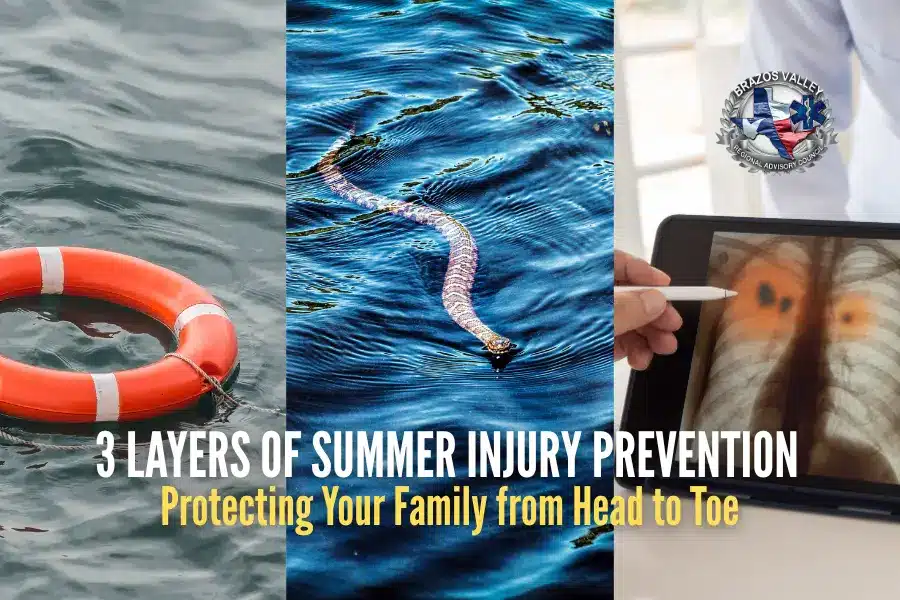
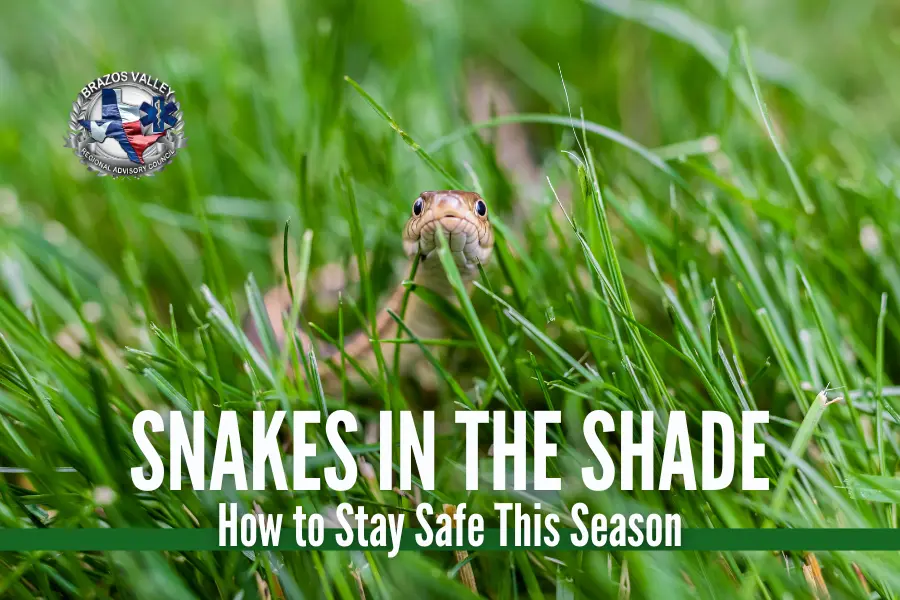
When the weather warms up, snakes become more active and more likely to show up in yards, parks, and trails. While most snakes are harmless and even beneficial for the ecosystem, a few venomous species found in our region can pose serious health risks if not handled with caution.
Here’s what you need to know to stay safe this season:
Common Venomous Snakes in the Brazos Valley
Texas is home to a variety of snake species, including four venomous types to watch out for:
- Western Diamondback Rattlesnake – Recognizable by its rattle and distinctive diamond pattern. Often found in rocky or grassy areas.
- Copperhead – Blends well with leaf litter due to its tan and copper bands. Prefers wooded areas and brush piles.
- Cottonmouth (Water Moccasin) – Often found near lakes, rivers, or wetlands. Known for its aggressive posture and open-mouth warning display.
- Texas Coral Snake – Rarely seen but highly venomous. Its red, yellow, and black bands are key identifiers.
Visit the Texas A&M Agrilife Snake ID Guide to get familiar with the species in your area.
Where Snakes Like to Hide
Snakes seek shelter in cool, shaded, or hidden areas, often close to their food sources. Be mindful of these common snake hiding spots:
- Tall grass and untrimmed bushes
- Piles of firewood, rocks, or debris
- Sheds, garages, and crawl spaces
- Garden beds with dense ground cover
- Under decks, porches, or outdoor equipment
Keep your yard well-maintained and clutter-free to reduce hiding places.
What to Do If You’re Bitten
If you or someone else is bitten by a snake, remain calm and take the following steps:
- Move away from the snake to avoid additional bites.
- Call 911 or seek emergency medical care immediately—even if you’re unsure whether the snake was venomous.
- Keep the bitten area still and lower than the heart to slow the spread of venom.
- Do not apply a tourniquet, cut the wound, or attempt to suck out the venom.
Quick medical treatment can make a major difference in outcomes.
How to Keep Your Yard Snake-Safe
Prevent unwanted snake encounters by taking a few simple precautions:
- Mow your lawn regularly and trim hedges.
- Eliminate rodent habitats and food sources.
- Store firewood and building materials off the ground.
- Seal gaps around doors, vents, and your home’s foundation.
- Use caution when gardening, lifting debris, or walking through tall grass—wear boots, gloves, and long pants when needed.
Be Prepared, Not Surprised
Snakes are a part of nature, but that doesn’t mean you can’t stay safe around them.
✅ Learn more about Snakes in Texas
✅ Call animal control or a wildlife expert for safe removal
✅ Wear proper footwear and gear when working outdoors or exploring trails
By taking preventive steps and knowing what to look for, you can enjoy the outdoors this season with greater peace of mind.
Visit BVRAC.com for more seasonal safety tips and resources.