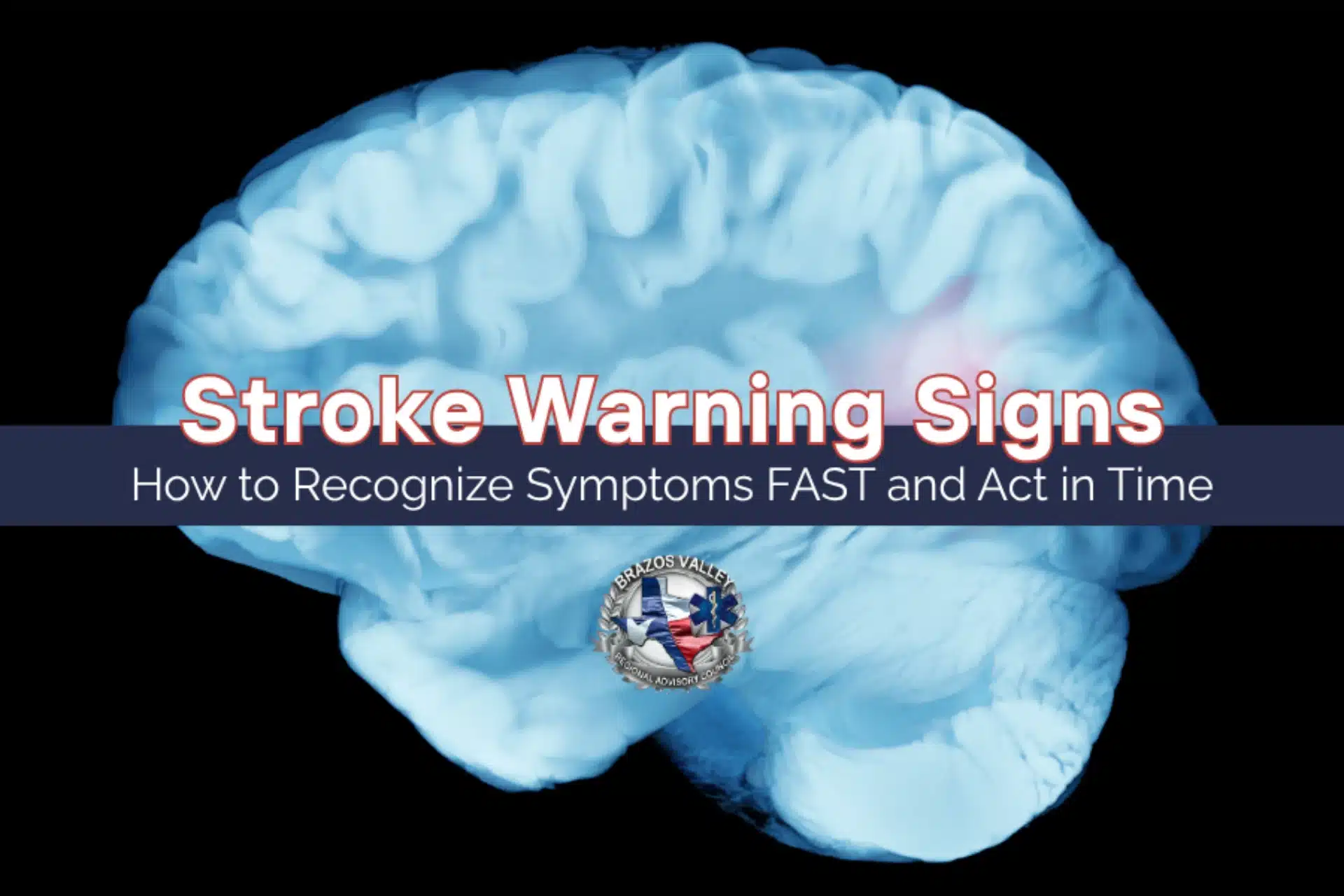
Every minute matters when it comes to a stroke. Recognizing the warning signs early and seeking immediate medical attention can save lives and reduce long-term disability. Across the Brazos Valley, stroke continues to impact individuals and families every year, making awareness and education more important than ever.
During Stroke Awareness Month, the Brazos Valley Regional Advisory Council (BVRAC) is encouraging residents across Brazos County, Burleson County, Grimes County, Leon County, Madison County, Robertson County, and Washington County to learn the signs of stroke and understand why acting FAST is critical.
What Is a Stroke?
A stroke occurs when blood flow to part of the brain is interrupted or blocked, preventing brain tissue from receiving oxygen and nutrients. Within minutes, brain cells begin to die. Stroke is a serious medical emergency and one of the leading causes of long-term disability and death in the United States.
There are three primary types of stroke:
Ischemic Stroke
This is the most common type of stroke and occurs when a blood clot blocks a blood vessel supplying blood to the brain.
Hemorrhagic Stroke
This type occurs when a blood vessel in the brain bursts, causing bleeding in or around the brain.
Transient Ischemic Attack (TIA)
Often called a “mini-stroke,” a TIA is caused by a temporary blockage of blood flow to the brain. Symptoms may go away quickly, but it should still be treated as a medical emergency because it can be a warning sign of a future stroke.
Recognizing Stroke Symptoms FAST
The easiest and most effective way to recognize stroke symptoms is by remembering the acronym F.A.S.T.
F – Face Drooping
Does one side of the face droop or feel numb? Ask the person to smile and check if the smile appears uneven.
A – Arm Weakness
Is one arm weak or numb? Ask the person to raise both arms. Watch to see if one arm drifts downward.
S – Speech Difficulty
Is speech slurred, difficult to understand, or absent? Ask the person to repeat a simple sentence and listen carefully.
T – Time to Call 911
If any of these signs are present, call 911 immediately. Do not wait to see if symptoms improve. Fast medical treatment can reduce brain damage and improve recovery outcomes.
Other Stroke Symptoms to Watch For
While F.A.S.T. covers the most common warning signs, strokes can also present with additional symptoms, including:
- Sudden confusion
- Severe headache with no known cause
- Sudden dizziness or loss of balance
- Trouble walking
- Sudden vision problems in one or both eyes
- Numbness or weakness on one side of the body
Even if symptoms seem mild or temporary, they should never be ignored.
Why Acting Quickly Matters
During a stroke, nearly 2 million brain cells die every minute that treatment is delayed. Immediate medical attention gives healthcare providers the best chance to restore blood flow and minimize damage.
Many stroke treatments are time-sensitive and work best within the first few hours after symptoms begin. Calling 911 instead of driving yourself to the hospital can also help first responders begin treatment sooner.
Stroke Can Happen to Anyone
Although age and certain health conditions can increase stroke risk, strokes can happen to anyone at any age. High blood pressure, smoking, diabetes, obesity, high cholesterol, lack of physical activity, and stress are all factors that may increase risk.
Knowing the signs of stroke is not just important for your own health; it could help you save the life of a family member, friend, coworker, or neighbor.
Helping Build a More Stroke-Aware Community
Stroke awareness starts with education and action. By learning the warning signs and sharing them with others, communities across the Brazos Valley can help improve emergency response and potentially save lives.
This Stroke Awareness Month, take a moment to remember:
F.A.S.T. — Face, Arm, Speech, Time.
One quick action could make all the difference.
For more stroke awareness resources and educational information, visit the BVRAC website throughout the month of May.