Heart disease continues to impact families across the Brazos Valley. From Brazos County to rural communities like Burleson, Robertson, Leon, Madison, Grimes, and Washington counties, heart-related deaths remain a serious concern.
Recognizing the warning signs early and acting quickly can save lives.
Your body often gives signals when something isn’t right. The key is knowing what to look for.
Chest Discomfort or Pressure
This is the most common heart attack symptom.
It may feel like:
- Pressure
- Tightness
- Fullness
- Burning
- Squeezing
Some people describe it as “an elephant sitting on my chest.”
The discomfort may last several minutes or go away and return. If chest pain is new, severe, or persistent, call 911 immediately.
Shortness of Breath
Feeling winded after minimal activity, or even while resting, can signal heart trouble.
Shortness of breath may:
- Happen with or without chest pain
- Occur during activity or at rest
- Wake you up at night
- Make it difficult to lie flat
This symptom is especially common in women and older adults.
Pain in the Arm, Jaw, Neck, or Back
Heart pain does not always stay in the chest.
Watch for:
- Left arm pain or tingling
- Jaw discomfort
- Upper back pain
- Neck tightness
These symptoms are often overlooked, particularly by women, who may experience less “classic” chest pain.
Nausea, Sweating, or Lightheadedness
Heart events can sometimes feel like the flu or extreme exhaustion.
You might experience:
- Sudden nausea
- Breaking out in a cold sweat
- Feeling faint or dizzy
- Unusual fatigue
In the Brazos Valley, especially during hot Texas months, these symptoms are often dismissed as dehydration or heat exhaustion. If they occur suddenly or alongside other warning signs, seek medical attention immediately.
The Silent Warning: High Blood Pressure
High blood pressure (hypertension) is often called the “silent killer” because it usually has no noticeable symptoms. Yet it plays a major role in heart disease.
Uncontrolled hypertension increases the risk of:
- Heart attack
- Stroke
- Heart failure
- Kidney damage
Regular blood pressure screenings are essential, especially for adults 35 and older or those with a family history of heart disease.
Why This Matters in the Brazos Valley
Across Brazos, Burleson, Robertson, Grimes, Leon, Madison, and Washington counties, heart disease continues to impact our communities at concerning rates.
Rural areas in particular may face:
- Longer emergency response times
- Greater distance to specialty cardiac care
- Fewer preventive health screenings
- Higher rates of chronic conditions
That makes early recognition even more important. The sooner treatment begins, the better the outcome.
When to Call 911
Call emergency services right away if you or someone near you experiences:
- Chest pain lasting more than a few minutes
- Shortness of breath
- Fainting
- Sudden severe upper body discomfort
Do not drive yourself if symptoms are severe. Emergency medical teams can begin life-saving treatment immediately.
Prevention Starts Before an Emergency
Even if you feel healthy, proactive heart care matters.
Know your:
- Blood pressure
- Cholesterol levels
- Blood sugar
- Family history
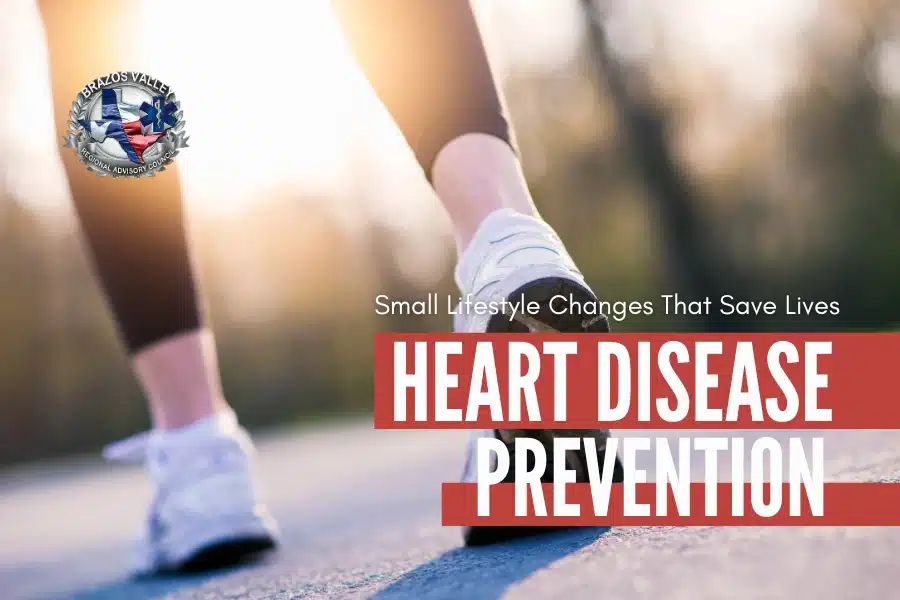
Protect your heart by:
- Staying physically active
- Reducing sodium intake
- Maintaining a healthy weight
- Quitting smoking
- Managing stress
- Following up regularly with your healthcare provider
Small daily habits make a big difference over time.
Regional Commitment to Heart Health
Brazos Valley Regional Advisory Council works alongside hospitals, EMS providers, and community partners to strengthen emergency response systems and improve outcomes for time-sensitive conditions such as heart attack and stroke.
Through education, coordination, and preparedness efforts across the Brazos Valley, regional partners are working to reduce preventable deaths and improve survival rates.
Community awareness is one of the most powerful tools we have.