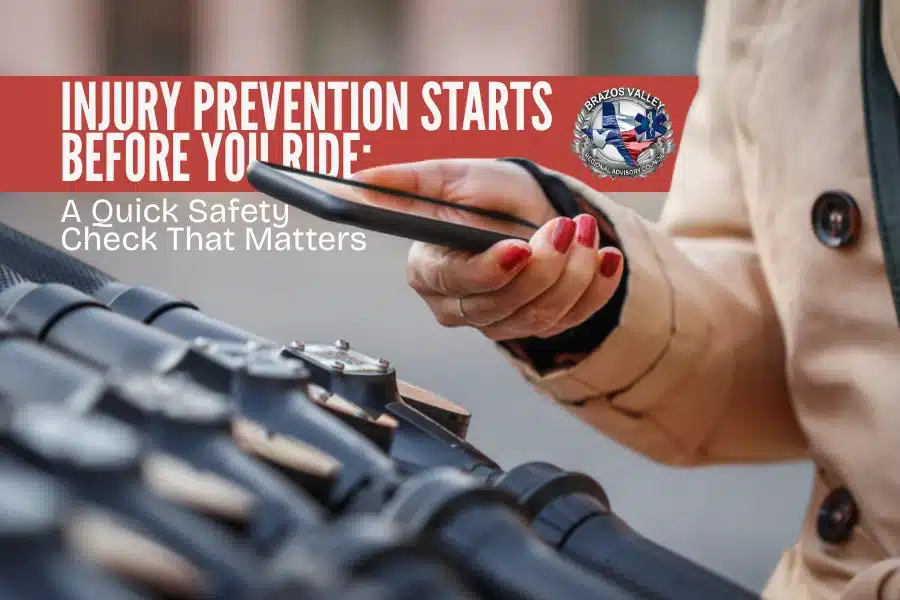
Most riding injuries start with missed preparation, not bad luck.
Whether you’re heading out on a bicycle, electric scooter, or motorcycle, the moments before you ride are just as important as the ride itself, if not more. A quick pre-ride safety check takes minutes, and can prevent the kind of accidents that put people in hospitals.
Injury prevention isn’t just about what happens on the road. It begins before you ever leave your driveway.
Why Pre-Ride Checks Matter
Equipment failures are a leading contributor to cycling and scooter-related injuries. Brake problems, flat or underinflated tires, and loose components can all cause sudden loss of control, especially at intersections or in high-traffic areas.
A quick visual once-over before each ride helps you catch problems before they become emergencies.
The Pre-Ride Safety Check: What to Look For
Before getting on any bike, scooter, or motorcycle, or otherwise, take a moment to check the following:
Your Helmet
- Inspect for cracks, dents, or damage to the shell or interior lining
- Make sure the buckle and straps are secure and properly adjusted
- If the helmet has taken a hard impact, replace it, even if it looks fine it’s protective integrity is likely compromised
Tires and Wheels
- Check tire pressure and look for visible wear, cracks, or punctures
- Spin each wheel to check for wobbling or rubbing
- Make sure the wheels are securely attached
Brakes
- Squeeze each brake lever or press the brake pedal firmly
- Confirm there is resistance and that the brake engages quickly
- Check that brake pads are not worn down and are making proper contact with the rim or rotor
- Test both front and rear brakes separately before riding
Handlebars and Frame
- Grip the handlebars and make sure they don’t twist or shift
- Look for cracks, bends, or visible damage to the frame
- Check that the seat is secure and at the right height
- For scooters, confirm the folding mechanism is locked in place
Lights and Visibility Gear
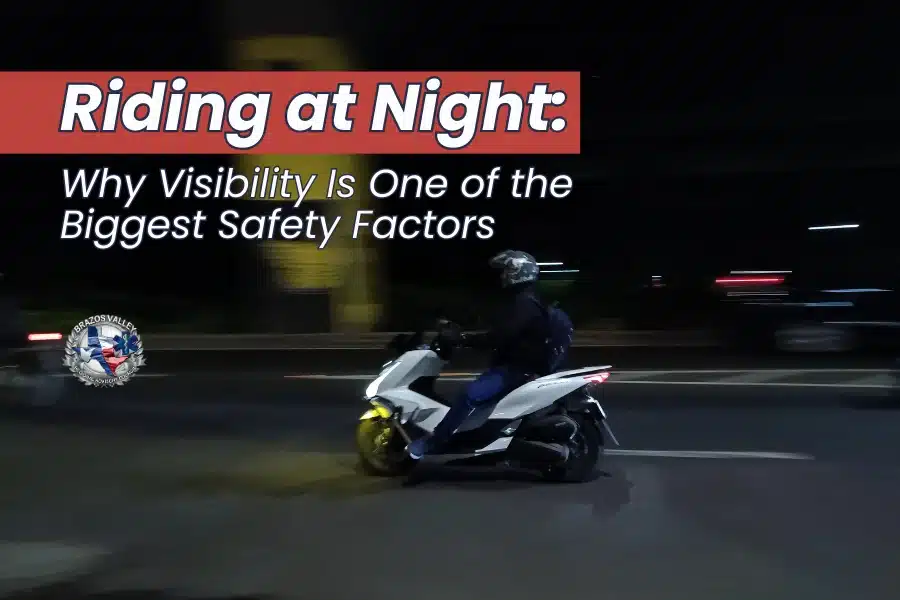
- If riding at dawn, dusk, or night, check that front and rear lights are charged (if necessary) bright enough, and working
- Wear or attach reflective gear to increase your visibility to drivers
- Bright or light-colored clothing is always a smart choice
Battery and Power (Electric Scooters)
- Check the battery charge before each ride
- A low battery can reduce braking effectiveness and cause unexpected shutdowns
- Make sure all electrical connections and indicators appear normal
Don’t Skip the Check Because It “Feels Fine”
One of the most common mistakes riders make is skipping the pre-ride check because nothing felt wrong the last time they rode. Equipment issues often develop gradually. A tire that looked fine yesterday may have a slow leak today. A brake pad that worked last week may now be loose or dangerously worn.
Building the habit of checking your equipment before every ride significantly reduces your risk of injury.
Dress for the Ride, Not Just the Weather
Protective gear is an important part of the pre-ride checklist, too.
Consider wearing:
- A properly fitted helmet (every ride, every time)
- Closed-toe shoes with good grip
- Long pants and knee pads
- Gloves to protect your hands in a fall
Protective equipment cannot prevent every injury, but it does dramatically reduce the severity of injuries when accidents do occur.
Ride Conditions Also Play a Role
Before heading out, take a moment to think about the environment, not just your equipment.
Ask yourself:
- Are the roads wet or slippery from rain?
- Is visibility reduced due to fog, darkness, or glare?
- Is there heavy traffic at this time of day?
- Am I familiar with the route and its hazards?
Adjusting your route, timing, or pace based on conditions is a sign of smart riding, not hesitation.
BVRAC and Injury Prevention in the Brazos Valley
In the Brazos Valley, Brazos Valley Regional Advisory Council is committed to reducing preventable injuries across our communities. Through public education, outreach, and collaboration with emergency responders and healthcare partners, BVRAC works to raise awareness about the everyday choices that keep people safe.
Injury prevention does not have to be complicated. A few minutes before each ride can save you from hours, days, or even months of recovery.
Check your helmet. Test your brakes. Inspect your tires. Put on your gear.
These simple steps, repeated consistently, are what injury prevention looks like in real life.
Want to learn more about injury prevention and trauma safety in the Brazos Valley? Visit BVRAC’s website for resources, education materials, and community initiatives designed to keep our region safe.