When we think about strokes, we often focus on the obvious risk factors, high blood pressure, tobacco use, or a family history of cardiovascular disease. But many people are unaware that some of the most dangerous stroke risks are the ones hiding in plain sight. Understanding these lesser-known threats can be the difference between prevention and emergency.
Sleep Apnea: The Quiet Threat to Brain Health
Obstructive sleep apnea, where breathing repeatedly stops and starts during sleep, doesn’t just disrupt rest. It’s also associated with high blood pressure, heart problems, and an increased risk of stroke. The Mayo Clinic notes that untreated sleep apnea can result in sudden drops in blood oxygen, straining the cardiovascular system and contributing to potentially life-threatening conditions like stroke Mayo Clinic, 2024.
What you can do:
- If you snore loudly, feel excessively tired during the day, or have been told you stop breathing at night, talk to your doctor.
- A sleep study can confirm the diagnosis and lead to effective treatments like CPAP therapy.
- Prioritize quality sleep as part of your overall health strategy.
Sedentary Lifestyle: Inactivity is a Silent Risk
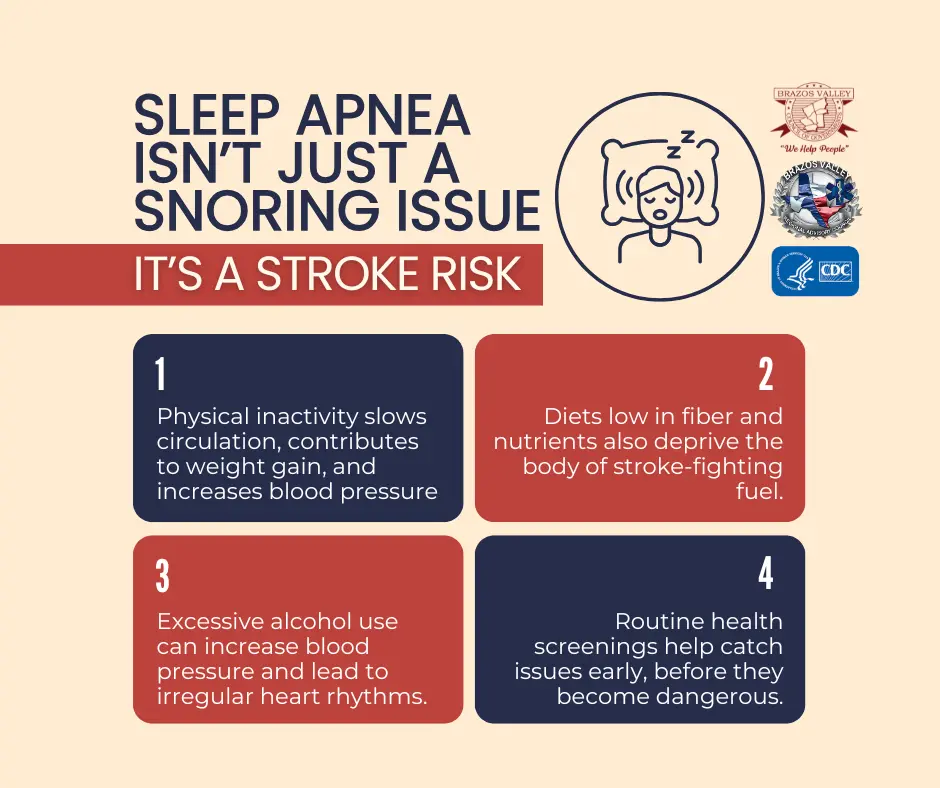
Hours at a desk, long commutes, and screen time are part of modern life, but prolonged inactivity can double your risk of stroke. Physical inactivity slows circulation, contributes to weight gain, and increases blood pressure. CDC, 2024.
What you can do:
- Move for at least 30 minutes a day. Walking, stretching, gardening, any activity counts.
- Incorporate movement into your routine, use stairs, walk while on calls, or try standing desks.
- Find enjoyable ways to stay active, dance, join a sports league, or try a fitness class.
Poor Dietary Choices: Not Just About Salt and Sugar
We know that high-sodium diets contribute to high blood pressure, but many people overlook how hidden sugars, processed foods, and trans fats quietly build stroke risk. Diets low in fiber and nutrients also deprive the body of stroke-fighting fuel. CDC, 2024.
What you can do:
- Eat more whole foods, fruits, vegetables, whole grains, and lean proteins.
- Limit processed snacks, fast food, and sugary drinks.
- Talk with a registered dietitian to develop a plan that works for you. Read labels and aim for heart-healthy choices.
Other Overlooked Risks: The Full Picture
There are additional hidden risk factors worth addressing:
- Excessive alcohol use can increase blood pressure and lead to irregular heart rhythms.
- Stress and poor mental health may contribute to unhealthy coping behaviors (like tabaco use or overeating).
- High cholesterol and obesity are frequently undiagnosed or unmanaged.
- Family history and certain demographics (like age, race, and sex) may elevate baseline risk and require more frequent screenings.
Regular Screenings Matter, Even If You Feel Fine
You can’t always feel high blood pressure or detect cholesterol buildup, but that doesn’t mean the risk isn’t real. Routine health screenings help catch issues early, before they become dangerous.
Recommended checkups include:
- Blood pressure monitoring
- Cholesterol and glucose testing
- Sleep evaluations if you experience fatigue or snoring
- Annual Physicals that include stroke risk assessments
Protect Your Future with Everyday Changes
Stroke is often preventable. While some risk factors—like age and genetics—are out of your control, many others are completely within your power to manage. The key is awareness and action.
Start today by:
- Scheduling a check-up with your healthcare provider
- Making one small healthy change (like a daily walk or swapping sugary snacks for fruit)
- Encouraging your loved ones to do the same
BVRAC Is Here to Help
At BVRAC, we’re dedicated to promoting health and safety across Brazos Valley. Through community education, regional coordination, and support services, we strive to reduce the impact of stroke and other health emergencies in our region.
Visit CDC Stroke to learn more about stroke prevention, emergency preparedness, and how we’re working to make our community stronger and healthier.
Start with awareness. Take action. And encourage your loved ones to do the same.