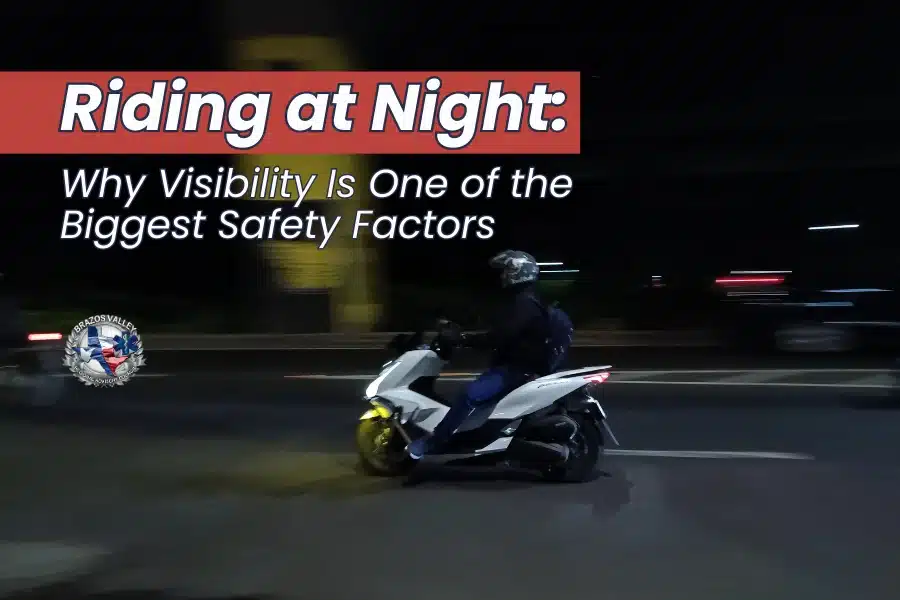
After the sun goes down, the road becomes significantly more dangerous.
Traffic signals look the same. Street signs still say the same things. But for cyclists, scooter riders, and motorcyclists, nighttime riding introduces a completely different set of risks. Most of them are tied to one critical factor: visibility.
When drivers can’t see you, the chance of a collision rises dramatically. Understanding why visibility matters and how to improve it is one of the most important things a rider can do to stay safe on the road after dark.
The Visibility Problem at Night
Visibility during nighttime riding works in two directions: being seen by others and being able to see hazards yourself. Both are significantly reduced after dark.
Factors that make nighttime riding more dangerous include:
- Reduced lighting makes riders much harder for drivers to detect
- Road hazards such as potholes, debris, and uneven pavement are harder to spot
- Intersections become higher-risk zones when drivers misjudge the speed or presence of riders
- Oncoming headlights can temporarily reduce a driver’s ability to see riders around them
Many nighttime accidents happen not because a driver was reckless, but because they simply did not see the rider until it was too late.
Lights: Your First Line of Defense
Proper lighting is the single most effective way to improve your visibility at night. Riding without lights after dark is one of the most dangerous decisions a rider can make.
Front Light
- Use a white front light bright enough to illuminate the road ahead
- A flashing mode increases attention in lit areas; a steady beam is better on dark stretches
- Check the battery or charge before every night ride
- Keep it pointed at the ground, so as not to blind drivers
Rear Light
- A red rear light is essential and often legally required
- A flashing rear light significantly increases how far away drivers can spot you from
- Mount it where it has a clear line of sight to traffic behind, not behind a bag
Helmet-Mounted Lights
- A helmet light moves with your head, improving visibility from multiple angles
- Especially useful when signaling turns or scanning intersections
Reflective Gear: Visibility Even When Lights Fail
Lights are active visibility tools. Reflective gear is passive, and it works by bouncing a driver’s own headlights back toward them, making you visible even if your lights dim or die.
Effective reflective gear includes:
- Reflective vests or jackets worn over regular clothing
- Reflective ankle bands, which move with your legs and catch attention quickly
- Reflective tape on helmets, frames, and bags
- Bright or light-colored clothing as a baseline, as dark clothing blends into the background at night
Reflective gear is inexpensive, lightweight, and easy to incorporate into any ride. It should be a standard part of your nighttime kit, not an afterthought.
Riding Behaviors That Improve Night Safety
Gear and lights are critical, but how you ride at night matters just as much.
Slow Down
- Your ability to spot hazards early is reduced at night, and lower speed gives you more time to react
Use Well-Lit Routes
- Choose roads with street lighting whenever possible and plan your route before you leave
- Avoid unlit trails, alleys, or unfamiliar paths after dark
Be Predictable
- Use hand signals clearly and early
- Ride in a straight, consistent line to help drivers anticipate your movement
Stay Alert at Intersections
- Make eye contact with drivers before crossing
- Do not assume a driver has seen you just because they have stopped or slowed
BVRAC and Injury Prevention in the Brazos Valley
In the Brazos Valley, BVRAC works to strengthen trauma systems and promote injury prevention across the region. Through public education, community outreach, and partnerships with emergency responders and healthcare providers, BVRAC helps raise awareness about the everyday choices that prevent serious injuries.
Nighttime riding injuries are largely preventable. With the right gear, the right habits, and a commitment to visibility, riders can significantly reduce their risk every time they head out after dark.
Final Thoughts
You don’t have to stop riding after sunset, but you do have to ride differently.
Charge your lights. Put on your reflective gear. Choose a well-lit route. Slow down. Stay alert. Seconds matter. Make sure you’re visible enough to use them.
Want to learn more about injury prevention and trauma safety in the Brazos Valley? Visit BVRAC’s website for resources, education materials, and community initiatives designed to keep our region safe.