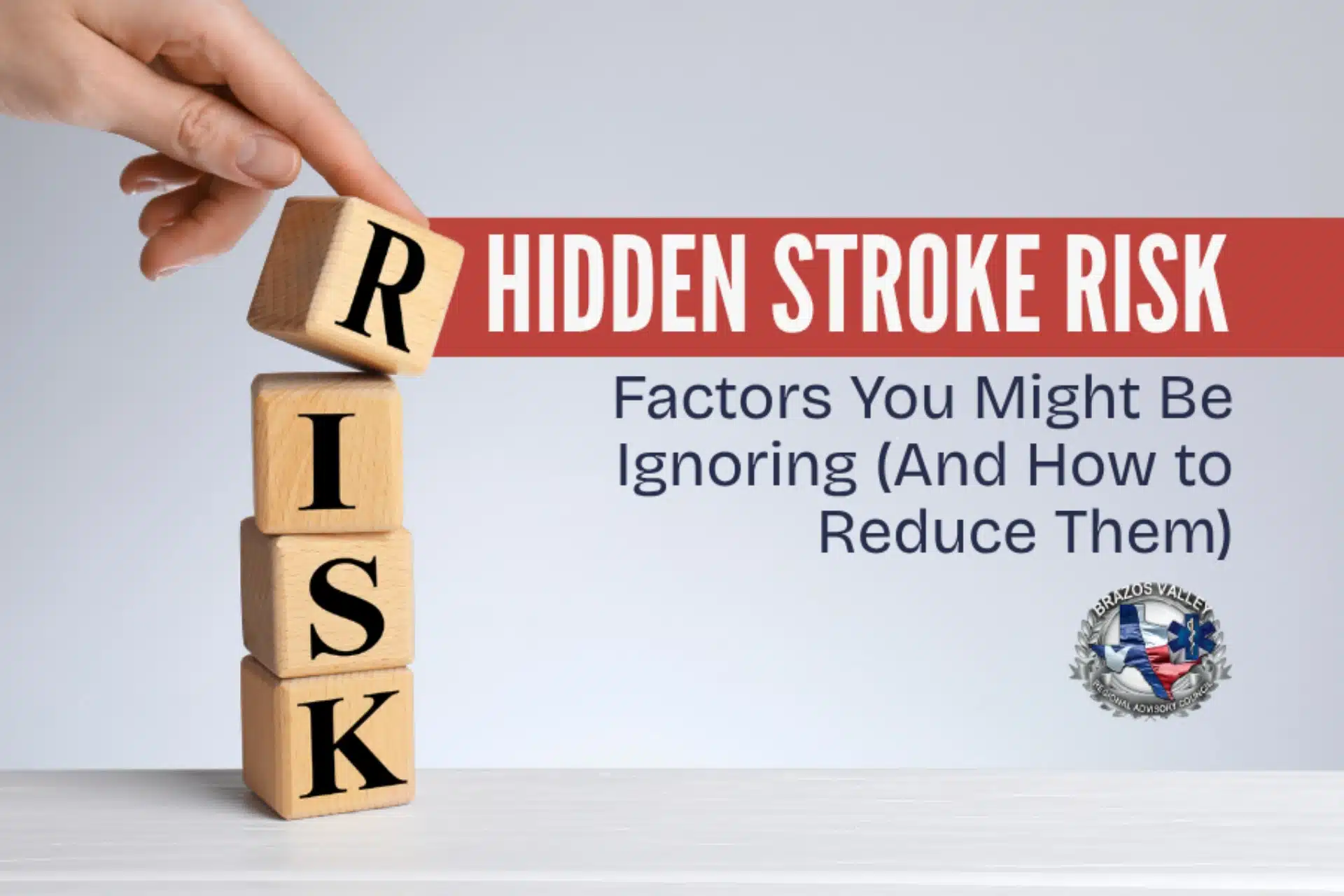
Often when people imagine a stroke, they picture dramatic warning signs: slurred speech, a sudden collapse, a face that won’t move. But in most cases, the conditions that make a stroke possible have been quietly building for months or years.
Across the Brazos Valley, many residents are living with hidden risk factors they don’t know about and haven’t been screened for. The good news? Most are manageable once you know they’re there. According to the American Stroke Association, up to 80% of strokes are preventable.
The Hidden Risk Factors You May Be Ignoring
High Blood Pressure is the single most significant controllable stroke risk factor, and it almost never has symptoms. Many people don’t know they have it until a routine screening catches it, or until it’s too late and something has gone wrong. Get your blood pressure checked regularly and aim for readings below 130/80 mmHg.
Sleep Apnea causes repeated drops in blood oxygen during sleep, putting serious strain on the cardiovascular system over time. It often goes undiagnosed for years, especially in people who live alone. If you snore loudly, wake up exhausted, or have been told you stop breathing during sleep, talk to your doctor about a sleep study.
Chronic Stress raises blood pressure, promotes inflammation, and drives unhealthy coping behaviors like overeating and excessive alcohol use. Because stress has become so normalized, most people dismiss it as business without realizing the toll it takes on their vascular health.
A Sedentary Lifestyle independently increases stroke risk even in people who appear otherwise healthy. Desk jobs and screen-heavy routines have made physical inactivity many people’s default mode. Aim for at least 30 minutes of moderate movement (this could be as simple as a walk down the street) five days a week. Consistency matters more than intensity.
Poor Diet is a slow, quiet contributor. Years of high-sodium, high-fat, and processed food intake raises blood pressure, cholesterol, and diabetes risk, all of which are major stroke factors. Small swaps make a real difference: choose water over sugary drinks, reduce canned and fast foods, and add more vegetables where you can.
Routine Screenings: Your First Line of Defense
You can’t manage what you don’t know. The most effective thing you can do right now is get screened. Here are some things to know:
- Blood pressure — Get checked at least once a year, or at every healthcare visit
- Cholesterol — Get checked every 4–6 years, more often with risk factors
- Blood sugar / A1C — Watch especially if you’re over 45, overweight, or have a family history of diabetes
- Sleep quality — Bring it up at your next appointment if you have concerns
If you don’t have a primary care provider, community health clinics across the Brazos Valley offer low-cost and sliding-scale screenings. Don’t let access or cost be a barrier; there are options available near you.
Why This Matters Here
In rural communities throughout Robertson, Burleson, Grimes, Leon, Madison, and Washington counties, residents often face longer distances to specialty care and higher rates of undiagnosed conditions. When emergency care is farther away, preventing a stroke in the first place becomes even more critical.
BVRAC works with hospitals, EMS providers, and community partners across the region to strengthen emergency stroke response. That work starts long before an ambulance is called. It starts with awareness and action at the individual and community levels.
Final Thoughts
Stroke doesn’t always announce itself. But the risk factors that lead to it are detectable and manageable when caught early. Know your numbers. Schedule that screening. Take one small step this week.
For more resources, visit our website.