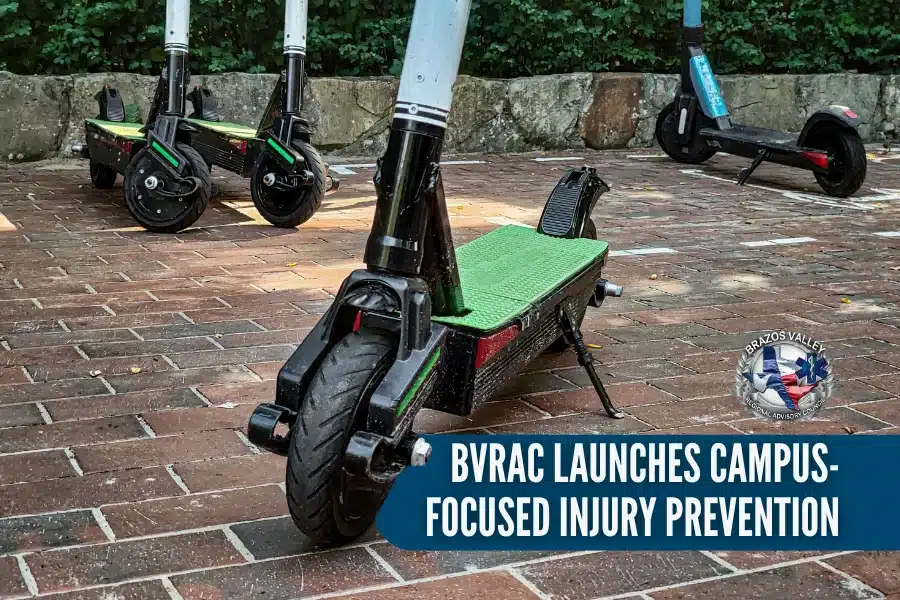
Brazos Valley, TX — The Brazos Valley Regional Advisory Council (BVRAC) is responding to rising injury trends across the region with a renewed focus on prevention education and campus safety initiatives.
Recent data from regional trauma and emergency medical systems indicate an increase in preventable injuries among young adults, particularly those related to falls, motor vehicle crashes, impaired driving, and high-risk behaviors. As colleges and universities continue to grow across the Brazos Valley, BVRAC is taking proactive steps to address these trends before they become long-term public health challenges.
Campus-Focused Safety Initiative
Through this new initiative, BVRAC is expanding injury prevention education across campus communities by providing:
- Injury prevention workshops designed to address common risks facing young adults
- Easy-to-access educational resources for students and faculty
- Awareness campaigns highlighting safe driving and the dangers of impaired driving
- Bystander intervention education to empower students to step in safely
- Safety information that connects students with local emergency resources
The goal is simple: give students the knowledge and tools they need to make safer decisions on and off campus.
Addressing Regional Injury Trends
Data trends show that young adults are disproportionately affected by certain types of trauma-related incidents. Through collaboration with hospitals, EMS providers, and community partners, BVRAC is using real-time regional data to guide prevention strategies tailored specifically to the Brazos Valley.
By aligning prevention messaging with documented injury trends, BVRAC strengthens the connection between public education and measurable outcomes.
Building Credibility Through Community Leadership
As the designated trauma service area leadership organization, BVRAC plays a critical role in sustaining an optimal and comprehensive trauma, acute care, and emergency medical system within the Brazos Valley region. This initiative further reinforces BVRAC’s commitment to proactive public health strategies that extend beyond social media campaigns and into direct community engagement.
“Prevention is one of the most powerful tools we have,” added John Heritage, program manager of the BVCOG Public Safety Planning Team. “When we collaborate with campuses and community leaders, we don’t just respond to trauma, we work to prevent it.”
BVRAC encourages students, parents, faculty, and community members to follow upcoming announcements regarding campus events and educational opportunities.
For more information about BVRAC’s injury prevention programs, visit https://bvrac.com/ or follow our social media.