Bringing your new baby home is an exciting moment, but it also comes with important choices about daily care and safety. Among the most crucial decisions parents make is how and where their infant sleeps. Good sleep is the first step to a healthy baby, and sleep-related deaths are a leading cause of loss during babies’ first year of life.
The good news is that creating a safe sleep environment can dramatically reduce these risks. By following evidence-based guidelines, parents, grandparents, and caregivers can help protect babies every time they go to sleep.
At the Brazos Valley Regional Advisory Council (BVRAC), injury prevention and public health education are core to our mission. We encourage every family across our region to learn and practice the fundamental ABCs of safe sleep.
The ABCs of Safe Sleep Explained
The American Academy of Pediatrics (AAP) summarizes the most effective safe sleep habits into three easy-to-remember rules: A, B, and C.
A: Alone
Babies should always sleep alone in their own dedicated sleep space.
- Share a room, not a bed: The AAP recommends room-sharing (having your baby’s crib or bassinet near you and in your room) for at least the first 6 months. This lowers the risk of SIDS by up to 50% while making nighttime feeding easier.
- Avoid bed-sharing: Sharing a bed with adults, siblings, or pets increases the risk of accidental suffocation, entrapment, and overheating.
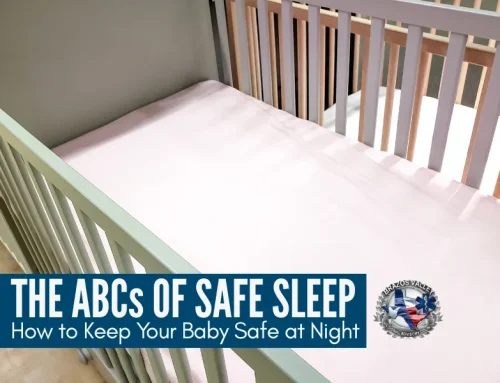
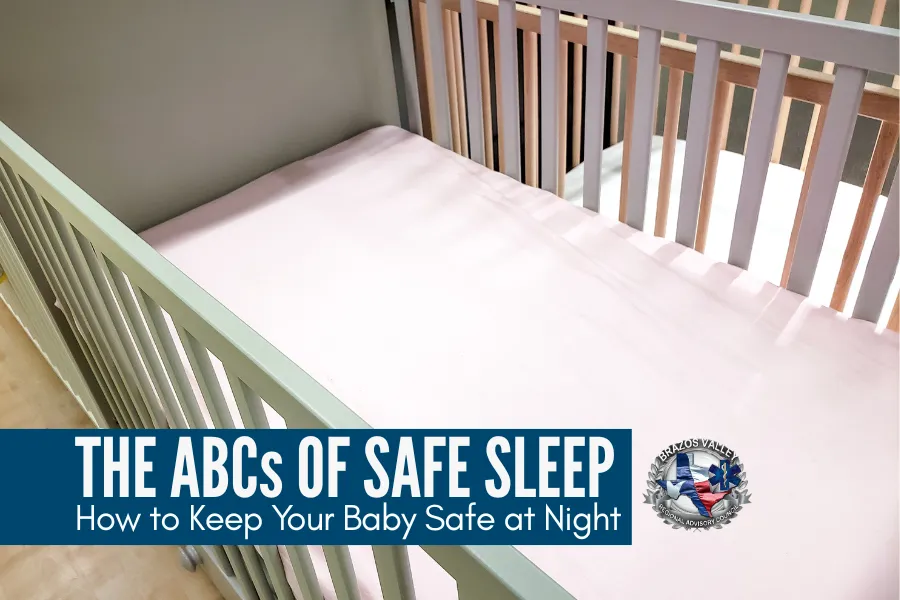
- Clear space: A safe crib contains only a fitted sheet. Keep soft objects, plush toys, loose blankets, top sheets, pillows, and bumper pads away from the crib.
B: On Their Back
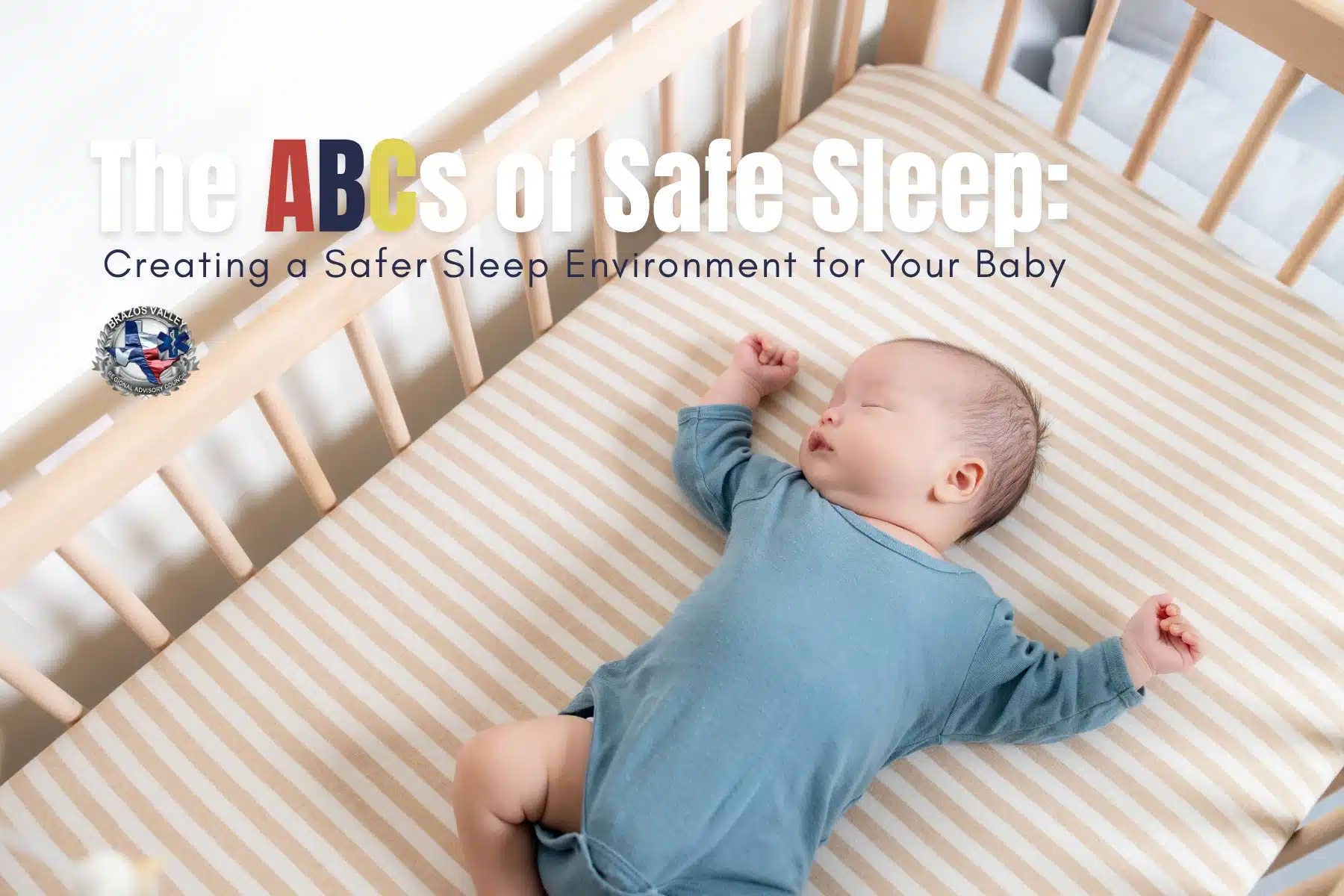
Babies should always be placed on their backs to sleep, during both naps and nighttime.
- Airway safety: Placing a baby on their back keeps their airway clear and allows their natural reflexes to protect against choking or aspiration.
- Avoid side or stomach sleeping: Sleeping on the stomach or side greatly increases the risk of SIDS and suffocation.
- Once they roll independently: Once a baby can roll from back to stomach and stomach to back on their own, you do not need to turn them onto their back if they roll over during sleep (still start them on their back).
C: In a Safe Crib
Babies should sleep in a safety-approved crib, bassinet, or portable playard.
- Use a firm, flat surface: The mattress should be firm (does not compress when your baby is on it) and covered with a tight, fitted sheet designed specifically for that product.
- What to avoid: Never let your baby sleep regularly on adult beds, couches, armchairs, waterbeds, memory foam, or inclined sleep products (such as baby swings or bouncers).
- In a car seat or stroller: If your baby falls asleep in a car seat or a stroller, it’s best to move them to their crib as soon as possible.
Additional Steps to Prevent SIDS and Sleep Hazards
In addition to the ABCs, several other everyday habits contribute to a safer sleep environment:
- Keep the room at a comfortable temperature: Dress your baby in layers of clothing (such as a wearable blanket or sleep sack) rather than using loose blankets. Overheating increases the risk of SIDS; a good rule of thumb is to dress your baby in one more layer than you would wear to be comfortable.
- Offer a pacifier at naptime and bedtime: Using a pacifier (without attached cords, clips, or stuffed animals) during sleep has been shown to reduce the risk of SIDS, even if it falls out after the baby drops off to sleep.
- Keep your baby’s environment smoke-free: Exposure to secondhand tobacco smoke before and after birth significantly increases the risk of SIDS. Keep your home, car, and surrounding air completely smoke- and vapor-free.
- Schedule regular pediatric checkups and immunizations: Routine checkups and up-to-date vaccines help keep your baby healthy and have been shown to protect against SIDS.
Educate Every Caregiver
A safe sleep routine works best when everyone who cares for your baby is on the same page. Whether it’s grandparents, babysitters, daycare providers, or older siblings, make sure anyone watching your infant knows and follows the ABCs of safe sleep without exception.
Safeguarding Infant Health in the Brazos Valley
Protecting our community’s youngest residents starts with awareness and consistent habits at home. By following the ABCs of safe sleep, families throughout our region can give their babies a safer, healthier start.
The BVRAC is dedicated to advancing trauma prevention, emergency care, and public education across the Brazos Valley. Through community outreach and evidence-based guidance, we strive to build safer environments for every family.