
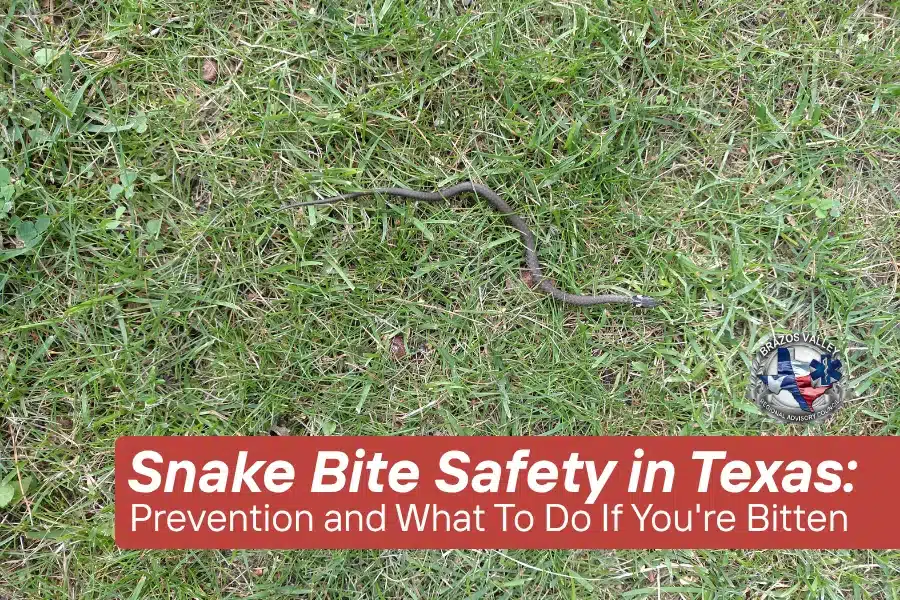
From hiking trails and ranches to neighborhood parks and backyards, snakes are a common part of life in Texas. While most snakes are harmless and play an important role in the ecosystem by controlling rodents and pests, some species are venomous and can pose a serious health risk if disturbed.
The good news is that snake bites are relatively uncommon, and most can be prevented by knowing how to avoid encounters and what to do if one occurs.
The Brazos Valley Regional Advisory Council (BVRAC) encourages residents to stay informed and prepared so they can safely enjoy the outdoors this summer.
Venomous Snakes Found in Texas
Texas is home to more snake species than any other state, but only a handful are venomous.
The four venomous snake groups found in Texas include:
Western Diamondback Rattlesnake
The Western Diamondback is the most commonly encountered venomous snake in Texas. It is recognized by its diamond-shaped pattern and distinctive rattle. These snakes are often found in rocky areas, grasslands, wooded areas, and even rural neighborhoods.
Copperhead
Copperheads have copper-colored heads and hourglass-shaped markings across their bodies. Their camouflage makes them difficult to spot among leaves, brush, and wooded areas.
Cottonmouth (Water Moccasin)
Cottonmouths are semi-aquatic snakes commonly found near ponds, lakes, rivers, marshes, and creeks. When threatened, they may open their mouths to reveal the bright white lining that gives them their name.
Coral Snake
Although less commonly encountered, coral snakes are highly venomous. They have distinctive red, yellow, and black bands. A helpful reminder is the rhyme:
“Red touches yellow, kill a fellow. Red touches black, friend of Jack.”
While this rhyme can help distinguish Texas coral snakes from some harmless look-alikes, it should never replace caution. If you cannot positively identify a snake, keep your distance.
Snake Bite Myths vs. Facts
There are many misconceptions about snake bites that can make an emergency even more dangerous.
Myth: You should suck the venom out.
Fact: This does not remove venom and can increase the risk of infection or further injury.
Myth: Apply a tourniquet.
Fact: Tourniquets can cut off blood flow and cause severe tissue damage.
Myth: Cut the bite with a knife.
Fact: Cutting the wound causes additional injury and does not remove venom.
Myth: Every snake is dangerous.
Fact: Most snakes in Texas are nonvenomous and help control insect and rodent populations.
Understanding the facts helps ensure the correct response during an emergency.
How to Prevent Snake Bites
Most snake bites happen when someone accidentally steps on, startles, or attempts to handle a snake.
You can reduce your risk by following these simple precautions:
- Stay on marked trails while hiking.
- Watch where you place your hands and feet.
- Never reach into tall grass, brush piles, or under rocks without checking first.
- Wear closed-toe shoes or boots when walking through wooded or grassy areas.
- Keep your yard free of tall grass, debris, wood piles, and clutter where snakes may hide.
- Use a flashlight when walking outside at night.
- Never attempt to catch, kill, or handle a snake.
Remember, snakes usually want to avoid people and will only bite if they feel threatened.
What To Do If You’re Bitten
If you or someone else is bitten by a venomous snake, or if you’re unsure whether the snake is venomous, treat it as a medical emergency.
Take these steps immediately:
- Move away from the snake to prevent another bite.
- Call 911 or seek emergency medical care immediately.
- Stay as calm as possible to help slow the spread of venom.
- Keep the bitten limb still and positioned at or slightly below heart level.
- Remove rings, watches, or tight clothing before swelling begins.
- If possible, remember the snake’s appearance from a safe distance but never try to capture or kill it.
Prompt medical treatment gives healthcare providers the best opportunity to manage the bite effectively.
What NOT To Do After a Snake Bite
Avoid these common mistakes:
- Do not suck out the venom.
- Do not cut or slice the bite.
- Do not apply ice.
- Do not use a tourniquet.
- Do not drink alcohol or caffeine.
- Do not attempt to catch or kill the snake.
- Do not wait to see if symptoms get worse before seeking care.
These actions can delay proper treatment and may increase the severity of the injury.
When Should You Seek Emergency Care?
Always seek emergency medical attention immediately if:
- You believe the snake was venomous.
- You cannot identify the snake.
- Swelling, severe pain, bruising, or redness develops.
- The person experiences difficulty breathing.
- There is dizziness, nausea, vomiting, or fainting.
- The bite is on the face, neck, or torso.
- The victim is a child, older adult, or has underlying medical conditions.
Even bites from nonvenomous snakes should be evaluated if there is significant bleeding, signs of infection, or uncertainty about the bite.
Stay Alert and Stay Safe
Snakes are an important part of Texas wildlife, and most encounters end safely when people give them space. By staying aware of your surroundings, wearing appropriate footwear, keeping your property maintained, and knowing how to respond in an emergency, you can greatly reduce your risk of a serious snake bite.
BVRAC’s Commitment to Injury Prevention
The Brazos Valley Regional Advisory Council (BVRAC) is committed to reducing preventable injuries through education, preparedness, and community partnerships. Helping residents recognize hazards, respond appropriately during emergencies, and make informed safety decisions is an important part of protecting the health of communities across the Brazos Valley.
This summer, enjoy the outdoors but remember to stay alert, respect wildlife, and know what to do if a snake encounter occurs.